
Dungeons and Dragons (D&D) is a tabletop role-playing game that’s been around since the 70s. It’s been through many versions over the years and is currently on its fifth edition, often shortened to 5e. The element that has always remained the same is that its a collaborative storytelling game. Players take on the role of characters that they’ve created and are guided by a facilitator. They must work together as a team to solve puzzles, defeat enemies, and interact with people in the world.
The facilitator might have ideas about where the players may go, but there is no set path for
players to take. The story progresses based on the decisions that the players make and how they interact with the world.
The facilitator is called a Dungeon Master (DM) or Gamemaster (GM). They describe the scene and then the players decide what their character would do in this situation. Players roll dice to determine whether or not they’re successful in what they’re trying to do, and the story progresses from there. For example, let’s say a player wants to convince a potential enemy that they’re on the same side. If they roll well, that potential enemy might just let them pass by without a fight. If the player rolls poorly, they may need to be ready for a fight.
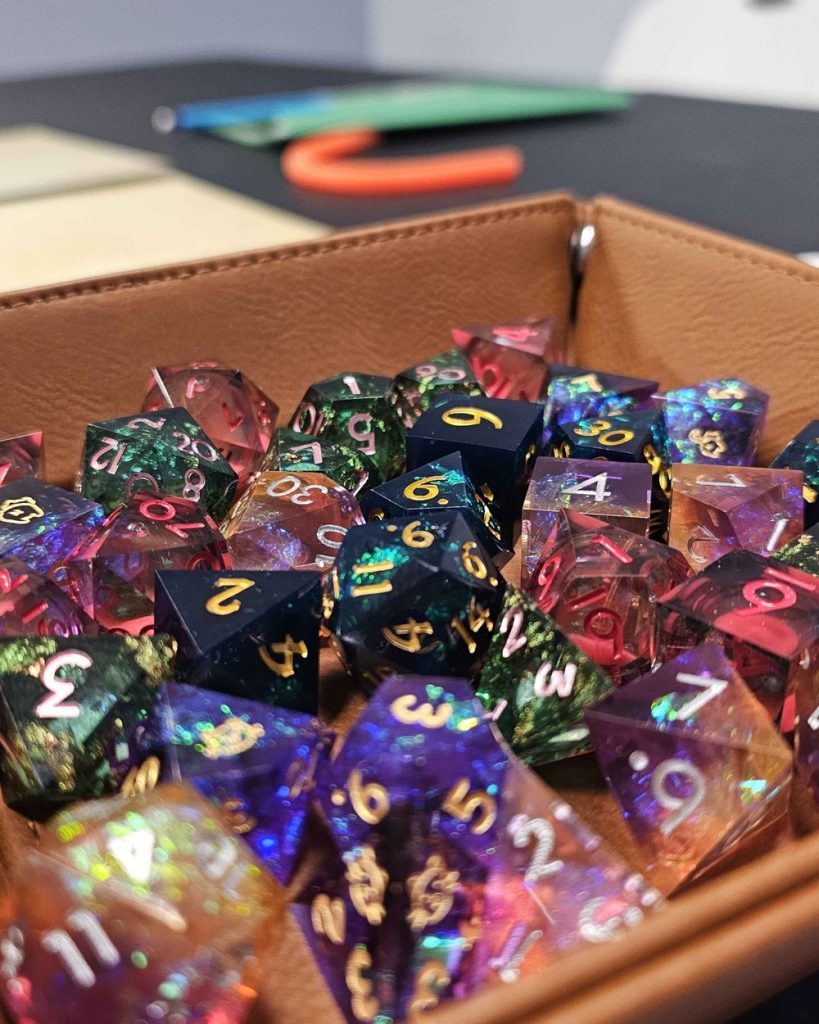
There is a growing body of evidence that supports the therapeutic use of tabletop roleplaying games (TTRPGs). A 2025 case study analysis in Behavioral Sciences found that
TTRPGs help clients enhance problem-solving abilities, assist in the processing of trauma, and foster empowerment through narrative agency.
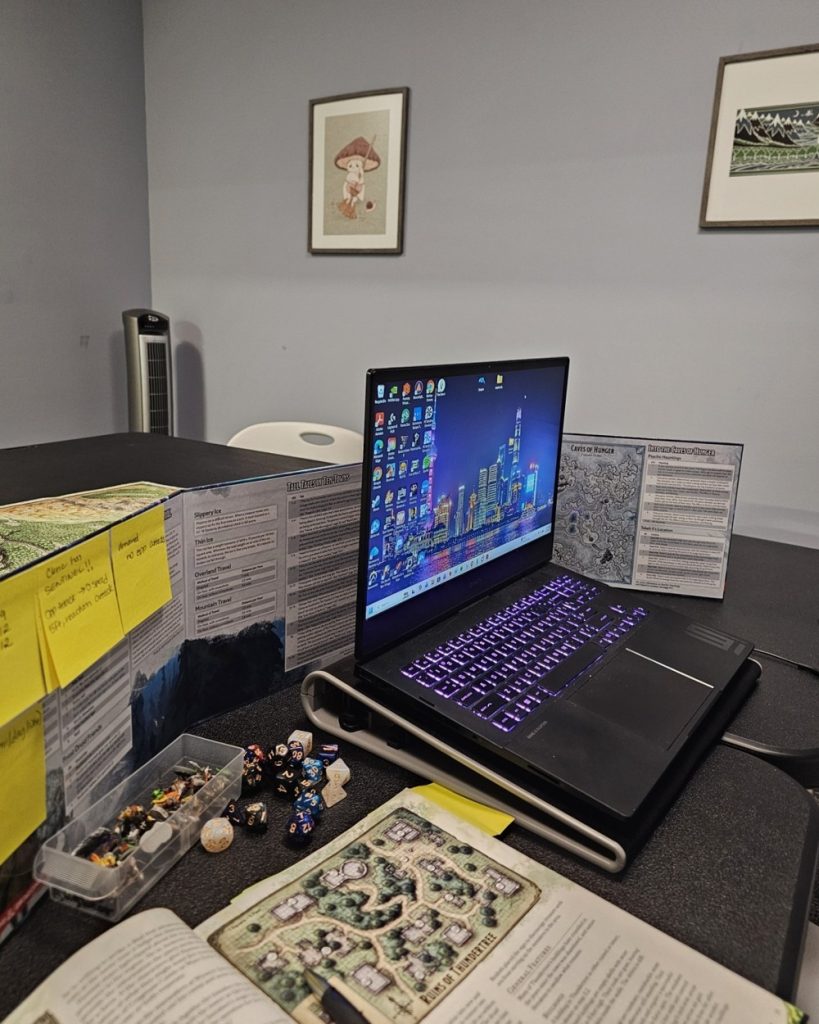
The same study found that TTRPGs have shown particular benefit for adolescents on the autism spectrum, as it helps them practice social interactions within their comfort zone, develop empathy, and enhance emotional regulation. A 2010 study found that D&D facilitates higher levels of creativity, empathy, and self awareness.
This is experiential learning which allows clients to practice skills that they’ve learned in individual therapy in a relatively low-stakes environment. It’s fun and it doesn’t feel like therapy, which makes it easier to engage with.
Meet your GM
Melissa has been a practicing clinician for five years. She has worked in community mental health, hospital, and private practice settings. She started playing Pathfinder in 2017 and shortly after made the switch to playing D&D. She’s been GMing off and on for five years and has previously GMed a D&D-based psychosocial rehabilitation group. Her favorite classes to play are Rangers, Clerics, and Sorcerers.
What is the group?
Our 10-week Dungeons and Dragons social skills group is a fun and interactive way to develop and practice social skills, explore identity, communicate effectively, and develop empathy. There’s no D&D experience needed and we provide almost everything you’ll need to get started.
We have groups for adolescents (14-17), and will open a group for adults if there is enough interest. These are small groups with at maximum five clients. We will need at least two participants to run a group, but three or more are preferred. If we do not have enough participants by the group start date, we will postpone until we have enough. Once a group’s sessions are underway it is closed to new participants, though continuing groups may open spots at the start of a new 10-week block. We will still take the information of any interested clients, and reach out once a group becomes available.
What happens after the interest survey?
The interest survey gets sent over to Melissa. She’ll review it then reach out to you to set up a one-on-one meeting. In this meeting you’ll discuss what goals you want to address with this group, your experience level with D&D, and what kind of character you might be interested in playing. If it sounds like you’re a good fit for the group we’re going to be running, she’ll go over everything you need to get started. You’ll probably want to bring a smartphone, tablet, or laptop with you. We also recommend doing some research into what classes you might be interested in. Melissa will send you some resources to help when she reaches out to set up the meeting, but you’re more than welcome to do research on your own before then. Unless otherwise specified, we’ll be using the 2014 ruleset.
Once we’ve got enough participants to get started, she’ll reach out to everyone and set up our Session Zero. Session Zero is where the players get to meet each other and introduce their characters. This is also where the group collaborates on group expectations and decides how their characters know each other. After that, it’ll be 10 weeks of group sessions.
Current group availability
Spots below reflect participants who have completed their one-on-one meeting and confirmed their interest. Last updated: September 24, 2026.
Saturdays, 12:00–2:30pm
The current group concludes August 29 and will resume October 3 with a Session Zero. Returning players will continue their existing adventure, and new players are welcome to join the party! Still beginner-friendly, just at a higher level. The campaign will resume at Level 5, so new participants will also begin at Level 5. During Session Zero, the group will work together to introduce new characters and establish how they joined the party. This is also a good opportunity for new players to familiarize themselves with their character sheet.
Saturdays, 9:00–11:30am — Session Zero October 3
This group will begin if there is enough interest.
Saturdays, 3:00–5:30pm — Session Zero October 3
This group will begin if there is enough interest.
Saturdays, 6:00–8:30pm (online) — Session Zero October 3
This group will begin if there is enough interest.
We need at least two confirmed participants to run a group (three or more preferred). If a group is full, please still fill out the interest survey — we’ll reach out as soon as a spot or a new group opens.
FAQs about Dungeons and Dragons (D&D) Group Therapy
Free Sessions
The one-on-one meeting is free and Session Zero is free.
Insurance Accepted
We now accept the following PPO insurances:
- BCBS
- United
- Anthem
- Cigna
- Aetna
We do NOT accept:
- Medicaid plans (for this service)
When will it be?
Our current adolescent group meets Saturdays from noon to 2:30pm. If there is enough adolescent interest, another group may be run from 9am to 11:30am. If there is adult interest, that group would meet from 3 to 5:30pm.
Our current adolescent group ends August 29. Our next group(s) will have their Session Zero on October 3, as long as there are enough participants.
Pricing Info?
- $50 per session for:
- Uninsured clients
- Clients choosing out-of-pocket
- One free missed session allowed
- After that → $50 late cancel/no-show fee
Interest survey questions
Hello! We are gauging client interest in a Dungeons and Dragons group designed to assist clients in developing and practicing social/interpersonal skills. Please answer the following questions to the best of your ability. I will reach out to schedule a one-on-one meeting and provide some character creation resources. In this meeting I will assess appropriateness for the group that we will be running, discuss client goals, go over informed consent, and provide some guidance on character development.
I would recommend doing some research into what species and class you might be interested in playing prior to this meeting, as it will allow for more productive use of time. It might not be a bad idea to have a few potential options in mind. For your reference, we are going to be using the 2014 ruleset. So, make sure that whatever you’re using to look at character options is talking about the 2014 basic and expanded rules and not the newest edition that came out in 2024.